Principle 2: State floodplain management programs should be comprehensive and integrated with other state functions.
Effective state floodplain management programs set a performance standard by ensuring not only that flood hazards are identified, avoided, minimized, and mitigated but also that floodplain functions and resources are protected whenever state construction projects or state-funded projects are undertaken. In addition, state floodplain management programs should be comprehensive and be integrated with elements from many state agencies and programs.
Because the actions and policies of many state agencies can influence new development, mitigation of existing flood risks, and resource management, effective state floodplain management programs are not confined to a single office or agency. (ASFPM, "Effective State Floodplain Management Programs," 2003)
Note: The table and figure numbers found below follow the order of those in the full 2025 FPM Assessment report [.pdf] and may not be sequential. Tables can be sorted by clicking on column headings. If tables and/or charts do not load, try refreshing the page.
Principle 2 Highlights
Question 10. Coordination with state programs
- States and territories are moving toward more established, formal coordination between floodplain management and core programs, especially Emergency Management, with 68% formally established (Question 10, Figure P2.1).
- Other state programs with regular coordination/interaction indicated were environmental quality, natural resources protection, dam safety, levee safety, and transportation.
Figure P2.1. Top 6 results for “Regular and Formally Established” coordination for Question 10 – How would you describe the coordination or interaction between your state floodplain management program and the following state programs?
Question 11. Coordination with federal agencies
- From 2017 to 2025, there is a clear trend toward more formal, regular, and structured coordination with federal partners, most dramatically with FEMA and the Army Corps of Engineers (Question 11, Figure P2.2).
- FEMA is the hub of formal floodplain management coordination – all responding states generally have a strong and ongoing partnership with FEMA.
- The National Weather Service, U.S. Geological Survey (USGS), and NOAA's Office for Coastal Management round out the top 5 responses.
Figure P2.2. Top 5 results for “Regular and Formally Established” coordination for Question 11 – How would you describe the coordination or interaction between your state floodplain management program and the following federal agencies?
Question 12. Allocation of effort
- States reported spending the highest level of effort for the following activities: monitoring and technical assistance (10–25%) and education and training (15–25%) (Question 12, Figure P2.3).
- Activities with lowest effort were promoting flood insurance, protection of natural resources, and grant programs.
Figure P2.3. Results for Question 12 – Considering your program’s overall effort, including time, personnel, and funding, what percent of your state’s floodplain management program is devoted to the following? Vertical bars show the range of percentages and the horizontal lines show the average percentage.
Question 14. Division of work with FEMA Region
- When asked about the division of work between their state floodplain management program and their FEMA Regional Office (Question 14, Table P2.4), from 2017 to 2025, responses indicate:
- States are shown as taking on stronger roles for Community Assistance Visits, community outreach, NFIP Workshops, Repetitive Loss, and insurance activities.
- A shift from states toward FEMA related to engineering assistance and map update process.
- Table Comparison Key:
- 🟩 State (Always State or Mostly State)
- 🟥 FEMA (Always FEMA or Mostly FEMA)
- 🟦 FEMA and State (Some State and Some FEMA)
Table P2.4. 2017 and 2025 results for Question 14 – Who is responsible for the following activities? See comparison color key above table. (Note: Scroll to see whole table.)
Added in 2025, a series of new questions – Q15 through Q26 – covered state floodplain management programs’ access and use of FEMA National Flood Insurance Program data and privacy concerns.
Questions 15-17. Information Sharing Access Agreement (ISAA)
- A majority (74%) of respondents reported they had an Information Sharing Access Agreement or ISAA to obtain data related to Repetitive Loss properties or flood claims history (Question 15, Map P2.1).
- In follow-up, those who reported that they do not have an ISAA, four states indicated that the process was too cumbersome, four states said that an ISAA was prohibited by their state’s legal counsel or management, and two states felt that it was not needed.
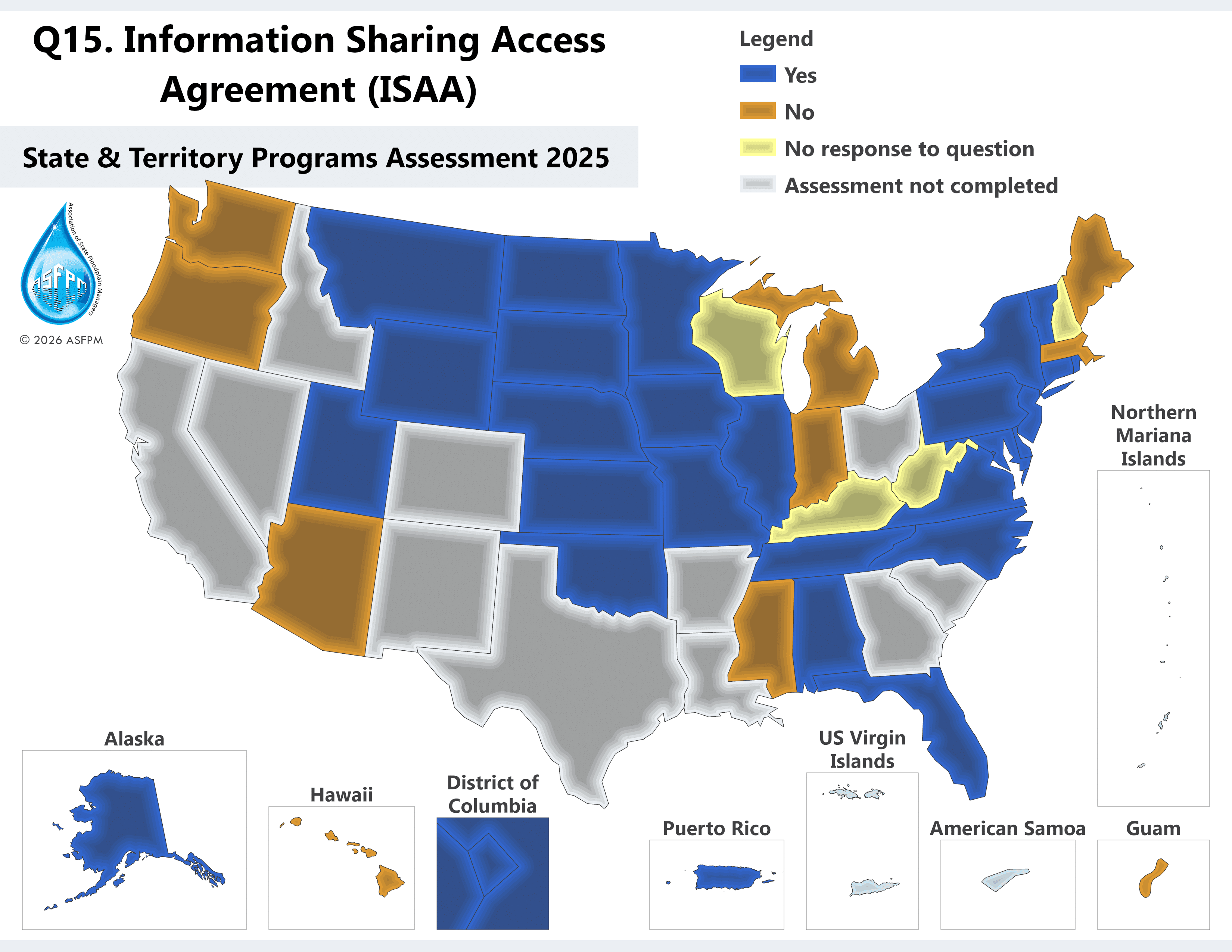
Map P2.1. Results for Question 15 – Does your state have an Information Sharing Access Agreement or ISAA to obtain information such as data for repetitive loss properties or flood claims history?
Questions 22-23. Uses of flood claims history location data
- Results show that states primarily use the specific locations of buildings with flood claims history for mitigation planning (83%) and mitigation project prioritization (81%) (Question 22, Figure P2.6).
- The majority of respondents, 67%, rated it as very or extremely important to have property addresses and flood claims history for carrying out successful floodplain management in their state (Question 23, Figure P2.7).
Figure P2.6. Results for Question 22 – What are the primary uses of specific locations and the property address of buildings with flood claims history for your state floodplain management program? Does your program use them for…
Figure P2.7. Results for Question 23 – How important to your program is having property addresses and flood claims history for carrying out successful floodplain management activities in your state?
Questions 24-25. Benefits of publicly available property-specific data
- Most respondents (82–95%) strongly support making FEMA’s property-specific flood loss data public, believing it would improve floodplain management effectiveness, with 95% saying it would help in prioritizing grant applications (Question 24, Figure P2.8).
- A large majority (84%) favored transparency when asked if the public benefits of sharing property-specific flood claims data outweigh property owners' privacy concerns (Question 25, Map P2.2). Only 16% prioritized confidentiality.
Figure P2.8. Results for Question 24 – If FEMA were to make the property-specific data, such as repetitive loss and severe repetitive loss designations and flood claims histories, available to the general public, would that help floodplain managers evaluate or improve the effectiveness for…
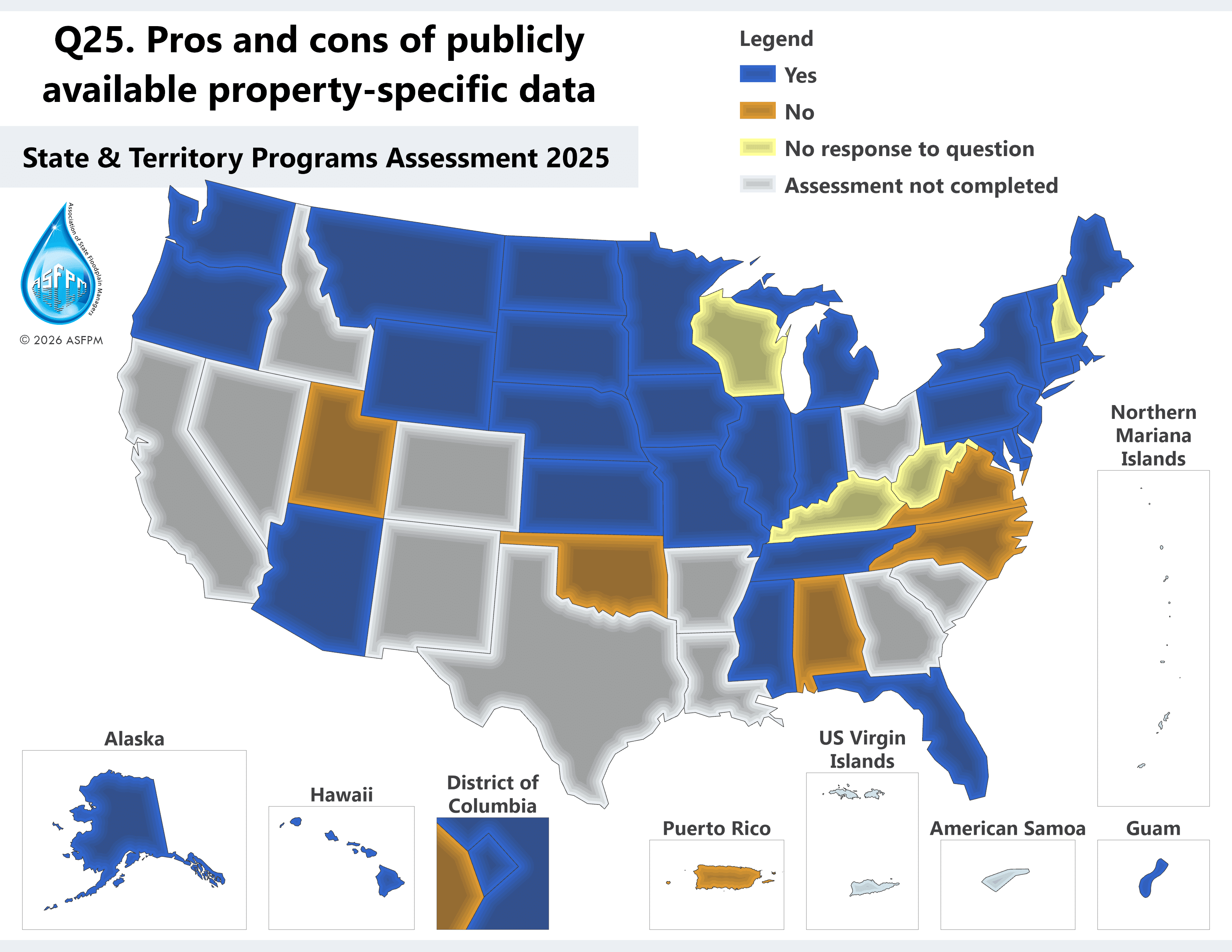
Map P2.2. Results for Question 25 – Do you think that the benefits of making property-specific flood claims data available to the public outweighs the interests of property owners to keep it confidential?
Continue to Principle 3 Highlights
Principle 1 | Principle 2 | Principle 3 | Principle 4 | Principle 5
Principle 6 | Principle 7 | Principle 8 | Principle 9 | Principle 10