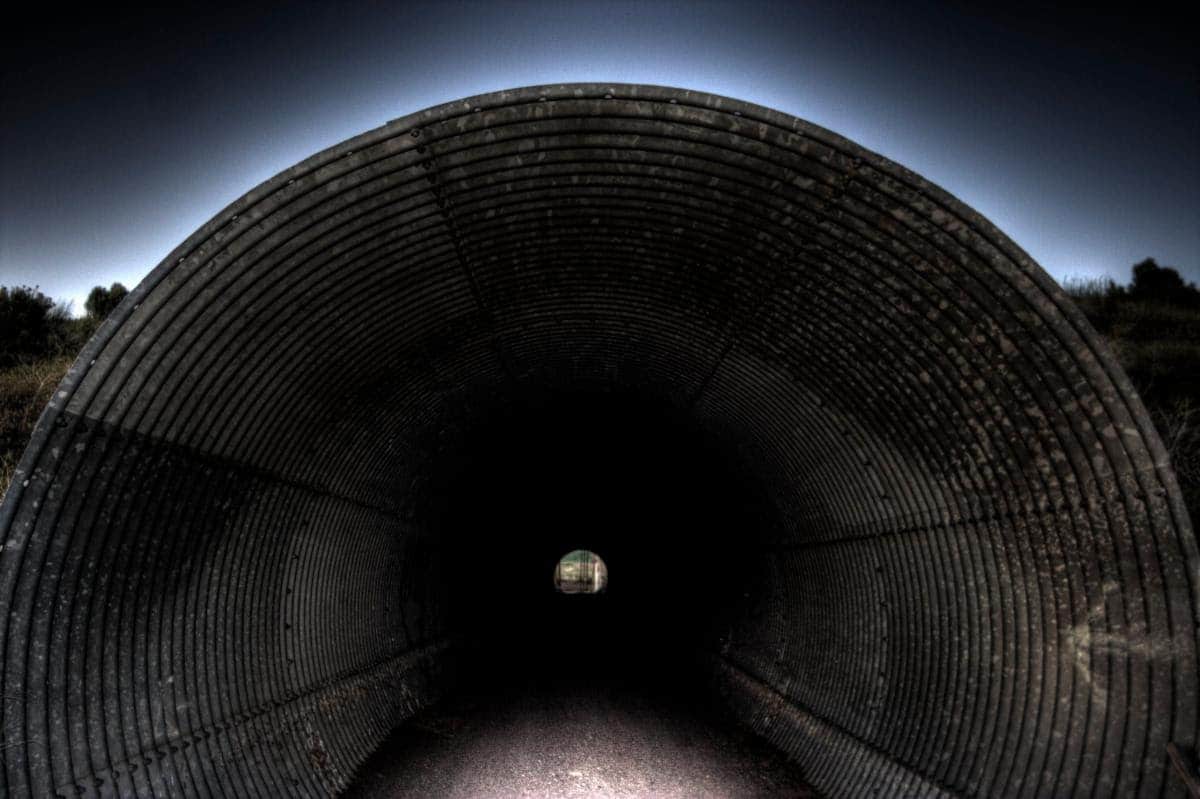
 Storm Drains Keep Swallowing People During Floods–this was the title of a recent ProPublica that told stories of several people that have drowned and disappeared into storm drains during floods and said the problem should be easy for federal, state, and local government agencies to fix but that it keeps happening. Mile High Flood District (MHFD) partnered with Colorado State University (CSU), AECOM, and the Larimer County Dive Rescue Team (LCDRT) to develop specific design guidelines for safety grates. The study put first responders in a flume at the CSU Hydraulics Laboratory to evaluate maneuverability at a 48-inch culvert inlet protected by multiple safety grate configurations. Qualitative evaluations and measured flow velocities were recorded for each test and compared to numerical solutions from 3-D Computational Fluid Dynamics (CFD) models completed by AECOM. CFD models were then used to identify optimal safety grate configuration options. Prototype testing of the recommended design configuration, coupled with LCDRT responder’s evaluation, provided clear design guidance for safety grate configuration and design criteria for future designs.
This webinar will also provide information on efforts to improve culvert resilience.
Presenters:
- Holly Piza, P.E., D. WRE, Research and Development Director at MHFD
- Christopher Thornton, PhD, P.E., Dir - Colorado State University Hydraulics Laboratory
- Darryl Rockfield, CFM, MO SEMA
- Brooke Seymour, P.E., CFM, Planning and Floodplain Management Director at MHFD
- Dakota Fisher, AICP, FEMA Hazard Mitigation Planning
Agenda:
- Webinar Logistics – Kevin Currie, ASFPM Training Coordinator
- Introduction - Alan Lulloff
- Culvert Safety Grates – Holly Piza and Chris Thornton
- Missouri Transportation Crossing Improvements – Darryl Rockfield
- Mile High Crossing Improvements – Brooke Seymour
- Flood Hazard Mitigation – Dakota Fisher
- Questions/Discussion
Slides: Culverts – Safety Grates and Mitigation Efforts
Recording: Culverts – Safety Grates and Mitigation Efforts
Note: Viewing the recording of this webinar is not eligible for CECs.
 Download Calendar Event
 Back to Calendar